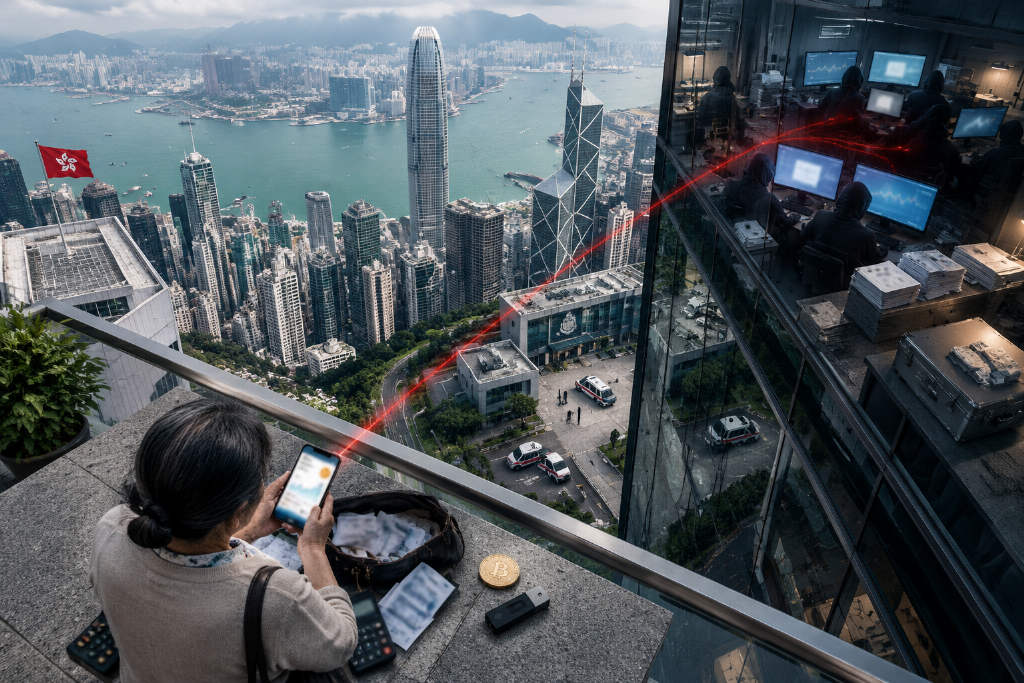
Hong Kong2026-10-04 02:35:35Hong Kong woman, 60, loses about HK$21.5 million in alleged crypto investment scamA 60-year-old woman in Hong Kong has reported a suspected cryptocurrency investment scam after being lured into transferring about HK$21.5 million to designated accounts, according to an Odaily newsflash citing HK01 NFT. The woman said she had earlier met a fraudster on an online platform who claimed to be an investment expert. She was then guided to invest in cryptocurrency through a fake website. The reported transfers were made repeatedly between April 14 and September 22, totaling about HK$21.5 million. After the funds were sent, the platform allegedly asked her to pay a security deposit, claiming it was needed to prove that the investment account had not been used for money laundering. Police have initially classified the case as obtaining property by deception. The fourth team of the Sau Mau Ping police district criminal investigation unit is handling the case. No arrests have been made so far.20
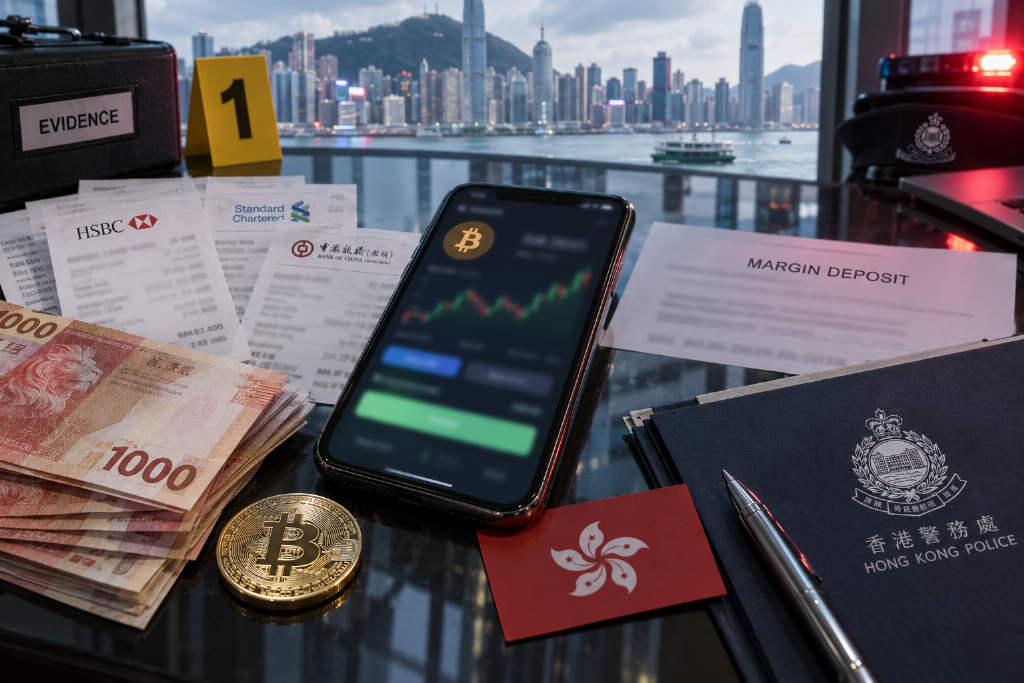
Hong Kong2026-10-04 02:35:47Hong Kong woman reports crypto investment scam involving about HK$21.5 millionA 60-year-old woman in Hong Kong has reported a suspected cryptocurrency investment scam, according to ChainCatcher. The woman told police she had earlier met a fraudster on an online platform who claimed to be an investment expert and later persuaded her to invest in cryptocurrency through a fake website. Between April 14 and Sept. 22, she made multiple transfers to designated investment accounts, totaling about HK$21.5 million. The platform later asked her to pay a margin deposit to prove that the investment account had not been used for money laundering. Police have initially classified the case as obtaining property by deception. The investigation is being handled by the fourth team of the Sau Mau Ping district crime squad, and no arrests had been made at the time of the report.20
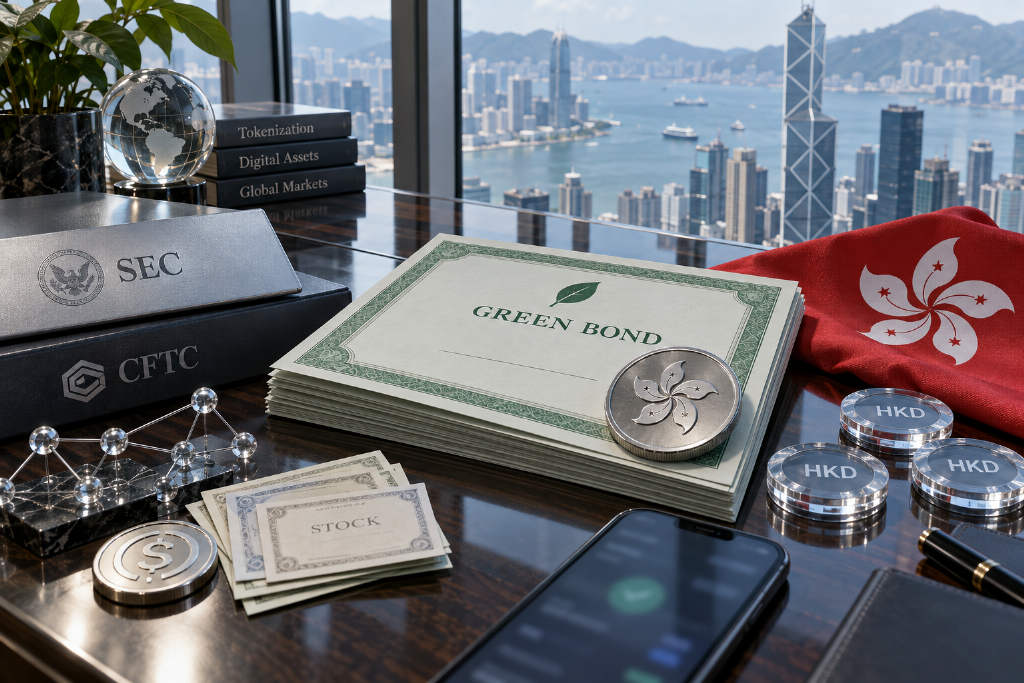
RWA2026-10-02 10:18:00RWA Weekly: Hong Kong Adds Tokenized HKD Deposits as OUSD Launches Across Multiple ChainsPANews’ latest RWA weekly roundup tracked the period from Sept. 25 to Oct. 2, 2026 and showed a market that is expanding in users even as parts of the sector cooled on valuation and transaction activity. On-chain RWA market value slipped to $38.55 billion, down 0.94% from a month earlier, while the number of asset holders climbed 51.6% to 5.0182 million. Stablecoin market capitalization rose to $294.04 billion, but monthly transfer volume fell 7.67% to $6.82 trillion, pointing to continued user growth alongside softer settlement activity. Regulatory developments drove much of the week’s agenda. A report cited by The Rollup founder Andy said the U.S. Securities and Exchange Commission is preparing to revise KYC rules so users could complete identity verification once and then access tokenized securities on-chain across platforms. The Commodity Futures Trading Commission updated crypto asset FAQs to say registered derivatives firms may treat tokenized money market fund shares and similar eligible instruments as compliant customer fund investments, while also accepting blockchain-based recordkeeping for federal retention requirements. In Europe, the European Central Bank outlined three models for bringing central bank money on-chain. In Asia, South Korea proposed expanding tokenized securities to include stocks, bonds and funds, and Hong Kong introduced tokenized Hong Kong dollar deposits into the primary issuance settlement process for its digital green bonds. On the product side, Aave V4 launched Equities Hub on Base, Ethena moved tokenized U.S. equities into the backing strategy for USDe, and Open Standard’s dollar stablecoin OUSD went live on Base, Ethereum, Solana and Tempo.20
HSBC2026-10-02 08:27:24HSBC names its Hong Kong stablecoin RedCoin, with P2P and P2M payments firstHSBC has named its Hong Kong stablecoin HSBC RedCoin, according to a news brief cited by HK01. The bank said the first phase will focus on person-to-person (P2P) payments and person-to-merchant (P2M) payments. The scope is set to expand later to commercial finance and enterprise use cases. Margaret Kwan, Chief Executive Officer, Hong Kong at HSBC, and Head of Retail Banking and Wealth Management, said the launch of the stablecoin is a starting point for supporting financial innovation in Hong Kong. The update was published by Odaily as a 7x24 newsflash and did not disclose additional rollout details in the brief.20
Hong Kong2026-10-02 02:34:25Hong Kong unveils first five-year plan with focus on innovation and fintechThe Hong Kong Special Administrative Region government has released its first five-year economic and social development plan for 2026 to 2030, setting out goals tied to China’s upcoming 15th Five-Year Plan and placing innovation and financial technology at the center of its agenda. According to the plan, Hong Kong aims to become an international innovation and technology hub, with local innovation spending targeted to reach 3% of GDP after 2030. It also wants the value added by manufacturing and emerging industrial sectors to account for 5.5% of GDP. The document says Hong Kong will strengthen national key laboratories and the InnoHK research platform, while expanding into frontier fields including quantum technology, aerospace, and ocean exploration. The government also plans to create a dedicated frontier technology task group, launch a special call for aerospace technology projects, and reserve HK$100 million for a gerontechnology promotion scheme. On the finance and industry side, the plan calls for consolidating Hong Kong’s role as an international trade center, deepening intellectual property trade, attracting major international and mainland brands and companies through dedicated incentives, and using modern finance to support the integration of technological and industrial innovation.20
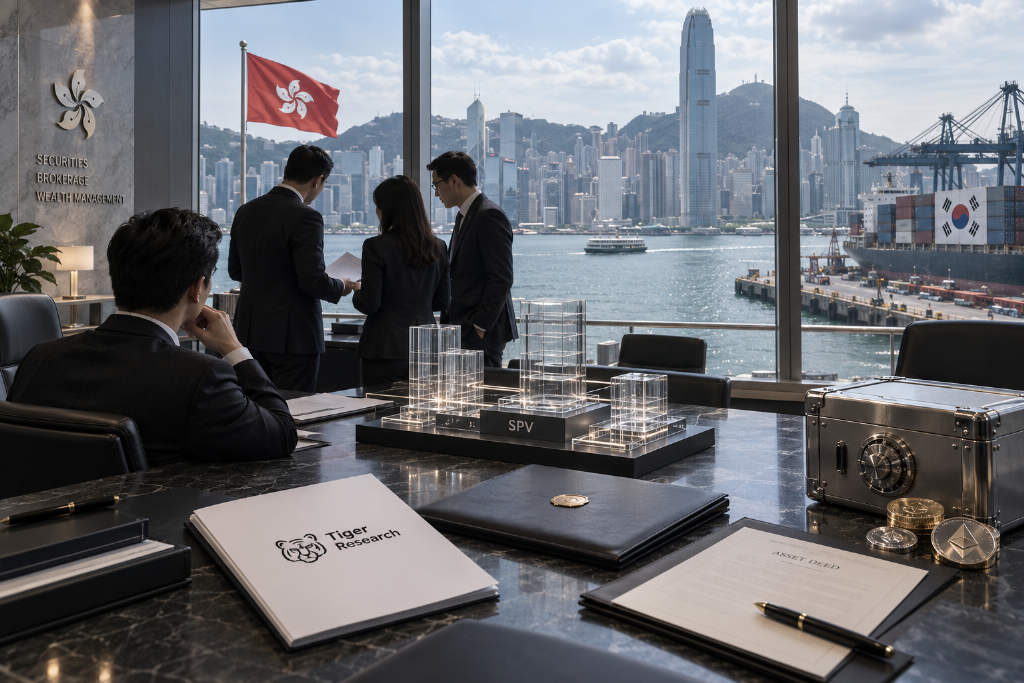
RWA2026-10-01 01:39:47Tiger Research maps a Hong Kong route for tokenized Korean assets, with repayment risk at the centerTiger Research examined a cross-border structure for real-world asset tokenization that uses Korean underlying assets, an offshore special purpose vehicle, a tokenization platform, and licensed intermediaries in Hong Kong to reach overseas professional investors. The report places the focus on what happens after issuance rather than at launch. In its view, a product can be sold successfully and still fail the more important test if cash generated by the underlying asset cannot move through the structure in full and on time. Citing data from RWA.xyz, the report says the tokenized real-world asset market grew from about $1.5 billion in August 2023 to about $38.86 billion on Sept. 13, 2026, roughly a 26-fold increase. It argues that the next phase of the market depends less on token issuance alone and more on whether issuance, distribution, and repayment can work as one operational loop. Hong Kong is highlighted as a practical issuance and distribution node because of its securities rules, investor access, and experience with tokenized bond offerings, including government bonds. The report also lays out the weak points in the model: unclear rights to cash flows, timing mismatches between asset proceeds and investor payments, and cross-border transfer and tax frictions. It says the long-term viability of the structure will be judged by whether due diligence gets faster after the first deal, whether investors return for new products, and whether asset holders keep supplying assets.00
RWA2026-09-30 07:31:01How Hong Kong’s RWA channel could carry Korean assets to overseas professional investorsA report by Tiger Research breaks down a practical route for real-world asset tokenization using Korean assets, an offshore special purpose vehicle in the British Virgin Islands, and Hong Kong as the distribution hub for overseas professional investors. The piece argues that the main challenge in RWA is no longer whether market size is growing, but whether a tokenized product can complete the full cycle of issuance, sale, and repayment. In the structure described, investors do not directly buy the underlying Korean asset. They buy notes or securities issued by the SPV, which uses those assets as economic backing. Hong Kong’s role is to provide a regulated path for review, investor qualification, and initial distribution through licensed intermediaries. The model also allows subscriptions in fiat or stablecoins, with the SPV converting stablecoins into fiat before the underlying assets are purchased through a Korean securities firm’s Hong Kong entity. Tiger Research says the model only works if cash flows from the underlying assets can be legally claimed, collected, and transferred to the SPV on time. It also points to three pressure points: unclear rights to proceeds, timing mismatches between asset cash recovery and investor payments, and cross-border transfer or tax bottlenecks. The bigger test, the report says, comes after the first deal: whether the same structure can support repeated issuance, investor re-entry, and steady asset supply.170
Hong Kong2026-09-30 05:14:57Hong Kong’s first five-year plan targets AI talent intake and workplace skills trainingThe Hong Kong government has released the first five-year plan for the Hong Kong Special Administrative Region, covering 2026 to 2030, with several technology-related measures under the labor and manpower agenda. The plan says authorities will dynamically monitor manpower supply and demand, strengthen vocational skills training, and expand the depth and breadth of local continuing vocational training in response to future skills needs and trends in innovative technology adoption. A key item in the plan is an update to the talent list, with the government set to study the inclusion of more categories tied to artificial intelligence applications. The stated goal is to focus on attracting the talent needed for AI development in Hong Kong. The government also said it will formulate response measures based on the mid-term update report of manpower projections and plans to launch an 18-month AI skills enhancement program for workplace applications in the first half of 2027. On the same day, the Hong Kong Monetary Authority said banks participating in the Intellectual Property Financing Sandbox had completed financing approvals for seven pilot cases. Loan sizes ranged from HK$1 million to HK$39 million, covering sectors including electronics, construction, toy manufacturing, and medical devices.150